Grappling looks like technique on the outside, but the real change happens in your muscles, your nervous system, and your decision-making.
When you start grappling, the first surprise is how much thinking it demands. You are moving, breathing hard, and still solving problems in real time. That blend of physical effort and strategy is why the training tends to stick and why progress shows up in places you did not expect, like posture, sleep, and how calm you feel under pressure.
In our classes here in Vacaville, we see the same pattern again and again: the body adapts because it has to, and the mind adapts because it is finally practicing focus in a messy, realistic environment. You are not just getting “in shape.” You are building a system that handles stress better, learns faster, and moves with more control.
This article breaks down what is happening under the hood, using practical, science-based explanations we regularly coach on the mats, especially for people interested in adult grappling in Vacaville who want results that go beyond a workout.
What Grappling Does to Your Body, From the Inside Out
Grappling is a full-body skill, but it is not random movement. Positions, frames, grips, and pressure create specific physical demands that push your body to adapt in predictable ways.
Strength That Is Built Through Leverage, Not Ego
A lot of people assume they need to “get strong first.” In reality, our training builds strength as a side effect of learning leverage. You develop pulling strength through grips, pushing strength through frames, and total-body tension through bridging, posting, and controlling distance.
What makes it different from simple weight training is the constant micro-adjustment. Your muscles learn to fire in coordinated patterns, not just in isolated reps. Over time, that carries into everyday life: you pick things up with better mechanics, your back feels more supported, and your hips move more freely.
Cardiovascular Fitness Without the Usual Boredom
If you have ever tried to jog for cardio and felt your brain shut off after ten minutes, grappling is the opposite. Your heart rate rises in intervals: scramble, settle, breathe, then scramble again. That pattern trains your aerobic base and your ability to recover between bursts.
We also coach pacing. You learn when to relax, when to grip, and when to let a position go. That skill alone often reduces fatigue more than “trying harder,” and it makes training sustainable for busy adults.
Joint Resilience, Mobility, and “Useful Flexibility”
We focus on movement quality because grappling rewards it. You are constantly rotating, hinging, posting, and shifting weight. Done progressively, that builds mobility where you actually need it: hips, ankles, shoulders, and thoracic spine.
A big part of staying healthy is learning to distribute load. Instead of forcing a joint to do the work, you learn to connect your whole body. That is one reason people often notice fewer nagging aches once they stop moving like a stiff statue all day.
The Nervous System: Why Training Feels Like Learning a New Language
You can know a technique intellectually and still freeze when it is live. That is not a character flaw. It is your nervous system doing what it always does under stress: narrowing attention and choosing the safest familiar option.
Motor Learning, Timing, and the “Slow to Smooth to Fast” Reality
We teach skills in layers. First you learn the shape of a movement. Then you learn timing. Then you learn to do it while someone resists. Your brain is building new pathways, and that takes repetition with feedback.
This is why drilling matters, and why we keep it purposeful. You are not just repeating motions. You are teaching your body where to put weight, how to feel balance shifts, and how to recognize a position before it fully forms.
Better Balance and Body Awareness
Grappling forces you to understand your center of gravity. When you get swept or off-balanced, you learn quickly what “too much weight forward” feels like. Over time, your posture improves without you trying to fix it in a mirror.
We see this especially with adults who sit for work. Training gives you a practical reason to stand taller, align your hips, and use your legs and core the way they were meant to be used.
The Psychology of Grappling: Stress, Confidence, and Decision-Making
The mental side of grappling is not just “toughness.” It is stress exposure with guardrails. You experience pressure, you practice responding, and you come out the other side fine. That is powerful.
Stress Inoculation You Can Actually Measure
In live rounds, your breathing changes, your heart rate jumps, and your brain tries to rush. With consistent training, you learn to notice those signals and correct them: exhale, frame, make space, reset position.
That practice carries over. Many students tell us they feel less reactive in traffic, at work, or in family situations. Not because problems disappear, but because your nervous system has learned that pressure does not automatically mean panic.
Confidence Built on Evidence, Not Hype
Real confidence comes from doing hard things repeatedly and surviving the learning curve. You get tapped. You adjust. You get tapped again, probably. Then one day you defend longer, escape cleaner, or set up your first controlled finish, and you realize you are changing.
We emphasize progress over ego. If you show up, pay attention, and stay consistent, you build a quiet kind of confidence that is hard to shake.
Focus and “Single-Tasking” in a Noisy World
Grappling demands presence. You cannot scroll, multitask, or half-listen. You are either engaged or you are getting moved.
That is one reason training often feels like mental relief. It is not empty relaxation, it is complete immersion. For an hour, your brain has one job: solve the problem in front of you.
Why Adult Grappling Works So Well for Busy Schedules
Adults tend to quit fitness plans for predictable reasons: the plan is too intense, too boring, or too disconnected from real life. Our approach to adult training respects that you have responsibilities and that your time has to pay off.
Progressive Intensity, Not Constant Max Effort
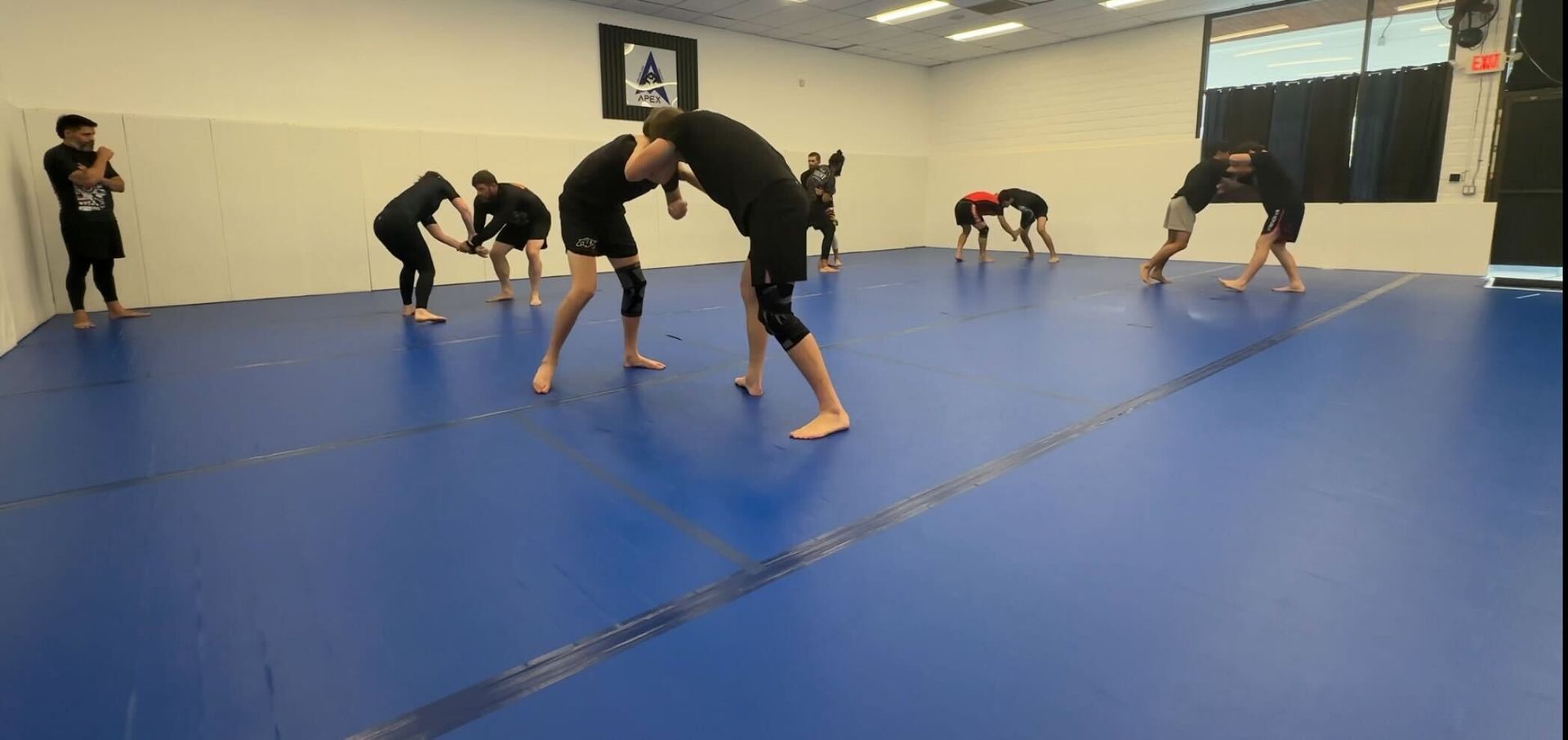
We build intensity over time. Some days are technical. Some days are more conditioning-focused. Live rounds are scaled to your experience level so you can learn without feeling like you are surviving a storm every class.
This is a big part of making adult grappling in Vacaville approachable. You do not need to be “in shape” to begin. You get in shape by training intelligently.
Community and Accountability Without the Awkward Pressure
Training partners matter. You need people who will challenge you and also keep you safe. We set that tone on the mats: controlled pace, clear communication, and respect for the tap.
When you know you will be welcomed and coached, it is easier to stay consistent. And consistency is where the real transformation lives.
What We Focus on in Our Grappling Curriculum
Different people walk in with different goals: fitness, self-defense confidence, competition curiosity, or just wanting a skill that is genuinely interesting. Our job is to give you a roadmap that makes sense.
Here are a few anchors we return to in class:
• Position before submission, so you learn stability and control instead of chasing finishes
• Escapes and defense early, because feeling safe is what keeps you training long-term
• Grip fighting and distance management, since small advantages decide most exchanges
• Breathing and pacing cues, so your energy lasts and your decisions improve
• Live practice with structure, because skills need resistance to become real
This is also what makes grappling in Vacaville feel practical and grounded. You are not collecting random moves. You are building a system.
How to Know You Are Improving (Even When It Feels Slow)
Progress can feel invisible week to week, especially when you are training with people ahead of you. We encourage you to watch for these signals:
1. You recover faster between rounds, even if you still get tired
2. You stop holding your breath and start breathing on purpose
3. You recognize positions sooner and make decisions earlier
4. You escape bad spots with less panic and more structure
5. You can repeat a technique in live rounds, not just in drills
If you notice even one of these, you are moving in the right direction. The wins add up.
Safety, Tapping, and Training for the Long Run
A science-based approach has to include safety. Grappling is close-contact and physical, but it does not have to be reckless. We coach tapping as a skill, not a surrender. You tap early, you learn, and you come back tomorrow.
We also emphasize communication. If you have an old shoulder issue, a tight neck, or you are just having a low-energy day, we adjust. The goal is not to “prove” anything in one session. The goal is to build a practice you can keep for years.
Take the Next Step
If you want a training method that strengthens your body, sharpens your mind, and gives you a real skill you can keep improving, grappling is hard to beat. The science is not abstract: it shows up in your conditioning, your posture, your stress response, and your ability to stay calm while solving problems under pressure.
We built everything at Vacaville Grappling Academy around that kind of sustainable growth, with coaching that meets you where you are and a class structure that makes progress feel clear instead of chaotic.
Refine your technique and build consistency by
joining a grappling class at Vacaville Grappling Academy.